
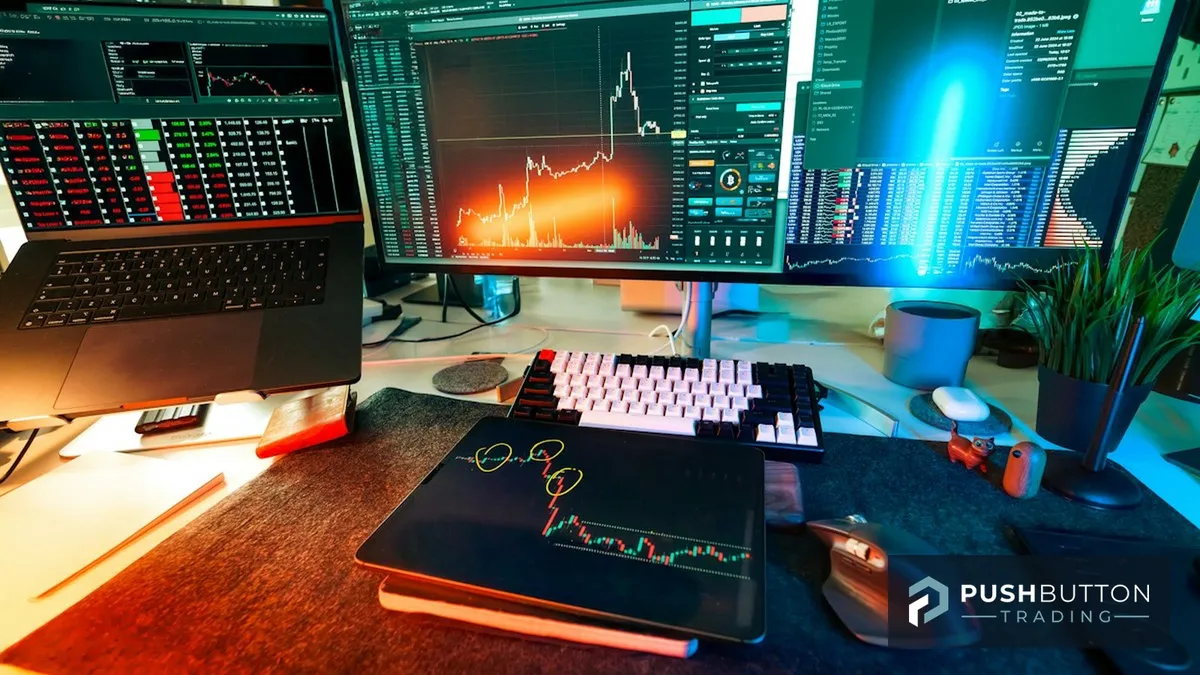
Overnight Globex Sessions: Should Your NinjaTrader Bots Trade Asian and European Hours, or Sleep When You Do?
Your bots don't clock out when you do. Once the U.S. session closes, Globex keeps running — Asian cash open, European cash open, the overnight grind that shows up on your NinjaTrader chart as a quiet drift between two bursts of real activity. The question isn't whether your bots can trade those hours. It's whether they should.
What's actually happening on the chart overnight
U.S. index and FX futures trade nearly 24 hours a day on Globex, but "open" doesn't mean "tradeable" in the way your bot's logic assumes. Overnight volume on ES and NQ typically runs a fraction of the regular session — thin books, wider effective spreads, and price action that's driven more by news headlines and order imbalances than the technical structure your strategies are built around.
Three windows matter most:
- Asian session (roughly 7 PM–3 AM ET): Lowest volume of the day for U.S. index futures. Moves can be sharp but thin — a single large order can push price further than it would during the day.
- European open (roughly 3 AM–8 AM ET): Volume picks up meaningfully, especially once London desks are active. Still lighter than the U.S. session, but closer to tradeable for range and breakout logic.
- The pre-open ramp (roughly 8–9:30 AM ET): Volume builds fast as U.S. desks come online, often the most distorted window of all — real positioning mixed with pre-market noise.
Why a backtest doesn't warn you about this
Most backtests average performance across the full dataset without separating session volume. A bot that looks solid on 4.5 years of combined data can be quietly bleeding small losses overnight while making its real money during the regular session — the backtest just nets the two together. If you've never filtered your own trade log by time of day, that's the first thing to check before deciding anything about overnight hours.
The case for letting bots run overnight
Automation's whole pitch is that the bot doesn't need you watching — so there's a real argument for leaving it on: overnight gaps and volatility spikes around news events can produce moves a rules-based strategy is built to catch, and missing them because you turned the bot off defeats the point of running a bot in the first place. If your strategy's edge comes from reacting faster than a human can at 2 AM, that edge only exists if the bot is actually on.
The case for sleeping when you do
The counter-argument is just as real: thin liquidity means wider slippage on fills, and a strategy tuned on regular-session volume can get chopped up by overnight noise that never would've triggered its entry logic during the day. For funded accounts specifically, a bad overnight fill against a trailing drawdown rule can do damage that's hard to recover from before the next session even opens — and most firms don't care that the loss happened at 3 AM instead of 10 AM.
A middle path: session filters, not an on/off switch
Treating "overnight" as one setting misses the point — Asian-session chop and the European open behave differently, and your bot's session filter should too:
- Match the strategy to the session's actual volume. Breakout and volume-driven bots generally need the liquidity of the regular session or the European open to work as designed; running them through the thinnest Asian hours is asking for false signals.
- Widen stops or stand down during known thin windows rather than using regular-session parameters around the clock.
- Check your firm's rules before anything else. Some funded account programs restrict or flag overnight/weekend holds entirely — a session filter that ignores your evaluation's rules can disqualify a trade regardless of how it performs.
- Review the Bot Portfolio Tracker by time of day before making a permanent call — a few weeks of session-tagged data tells you more than a gut feeling about whether a given bot earns its keep overnight.
Where to start if you've never looked
Pull your last month of fills and tag them by session — regular hours, European open, Asian hours. Most traders are surprised by what they find: often it's not that overnight trading is bad, it's that one specific bot or one specific window is doing all the damage while the rest of the portfolio is fine. That's a five-minute filter change, not a reason to turn everything off.
Push Button Trading's bots run on NinjaTrader 8 with roughly 4.5 years of backtest data behind each strategy — plenty of history to separate session performance before you decide what runs around the clock and what waits for the open.